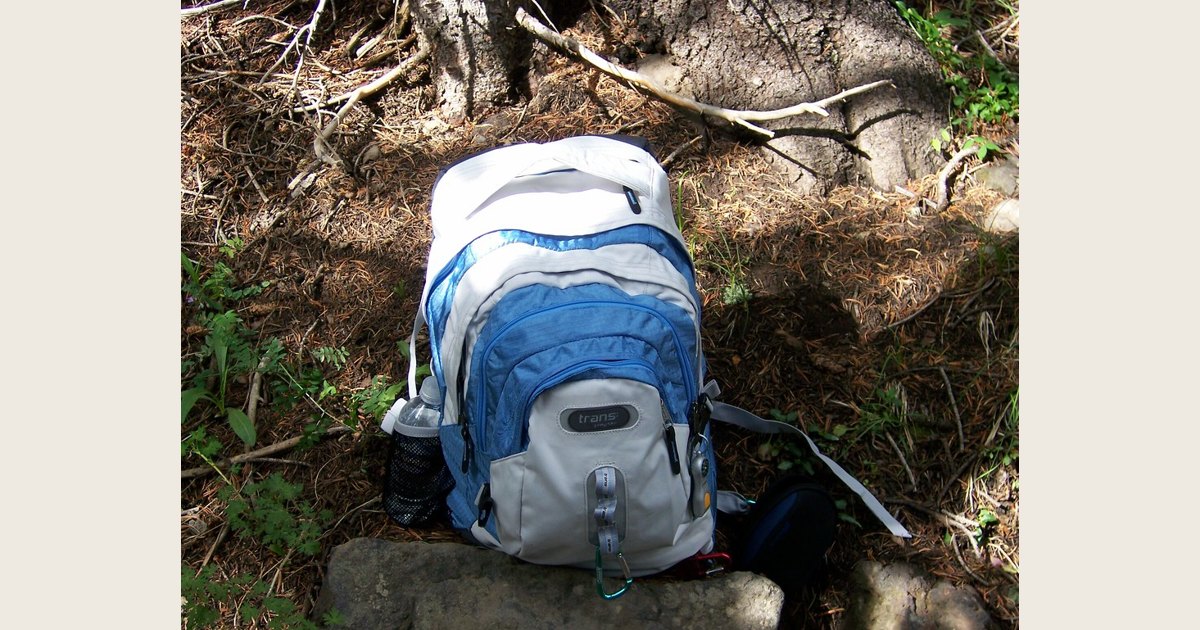
There isn’t one lightweight hiking backpack that’s best for every hiker. If you want a 60-liter pack and prioritize low published weight, the Zpacks Arc Haul Ultra 60L is the lighter pick; if you want a framed pack with abundant external organization, consider the Gossamer Gear Mariposa 60. Their makers give different load guidance, and the weights depend on configuration, so neither number is a promise that the pack will fit or feel right for you.
The practical answer: estimate your fully loaded trail weight, check the maker’s limit, and try the exact size with a representative load. This is a research-based comparison of manufacturer specifications—not a hands-on comfort, durability, or trail test.
Key Takeaways
- Choose by fit and total loaded weight first; a lighter empty pack doesn’t make an overloaded pack comfortable.
- The Mariposa 60 is listed at 33.4 ounces and has seven exterior pockets; its published capacity breakdown is for a medium pack and varies slightly by size. Its maker says it’s designed for comfort up to 30 pounds, with a 35-pound upper limit.
- The Arc Haul Ultra 60L has a 21.8-ounce headline weight and a maker-stated comfortable range of 30–35 pounds, with a 40-pound maximum. Its actual weight varies with the selected configuration.
- Both packs advertise 60 liters, but their main compartments and ways of counting pocket volume differ.
Cover photo: hiking backpack by andrew.petro, licensed under CC BY 2.0; resized. Illustrative stock, not a photograph of either reviewed model or evidence of product testing.
Best lightweight hiking backpacks at a glance
| Pack | A good fit for | Published weight | Capacity and maker’s load guidance |
|---|---|---|---|
| Gossamer Gear Mariposa 60 | A 60L pack with a framed carry system and many outside pockets | 33.4 oz advertised; actual listed weight changes with size and belt | 60L total for a medium pack: 36L body to extension-collar seam plus 24L across seven exterior pockets; varies slightly by size. Designed for comfort up to 30 lb, upper limit 35 lb |
| Zpacks Arc Haul Ultra 60L | Prioritizing a lower pack weight while keeping a framed 60L design | 21.8 oz headline figure; actual listed weight changes with the selected setup | 60L total; comfortable carrying range 30–35 lb, maximum 40 lb |
Use the weights as published, not as a lab-standardized comparison. The Mariposa page lists a 33.4-ounce advertised weight and size/belt combinations from 32.8 to 38 ounces. Zpacks lists 21.8 ounces as its headline figure, while options such as torso length, strap style, and belt size change the configured weight. Check the exact version and included components before comparing totals. (Gossamer Gear; Zpacks, accessed October 25, 2026.)
Which one should you choose?
Choose the Mariposa 60 for pocket organization
The Mariposa is the more natural choice if you want a traditional-looking, framed 60L pack and expect to use its exterior storage. Gossamer Gear’s published capacity breakdown is for a medium pack: 36 liters in the main body, measured to the extension-collar seam, and 24 liters across seven external pockets. The maker says capacity varies slightly by size. Someone who wants most gear inside one central compartment should compare the main-body volume, not just the 60L headline. (Gossamer Gear, accessed October 25, 2026.)
Its published weight is higher than the Arc Haul Ultra’s headline number, but the Mariposa still qualifies as a lightweight option. The manufacturer describes it as comfortable up to 30 pounds and gives 35 pounds as the upper carrying limit. The pack has a PVT frame and pivoting hipbelt, plus a removable frame and included sit pad. Those are specification-sheet details, not proof that the suspension will suit every body or load. See Gossamer Gear’s Mariposa 60 specifications for the current size and component options.
This makes the Mariposa a reasonable pick for hikers who value easy access to separated gear and whose expected load stays within the stated range. If you tend to carry more than 30 pounds, don’t treat the 35-pound upper limit as a comfortable everyday target.
Choose the Arc Haul Ultra to cut pack weight
The Arc Haul Ultra is the weight-first option here: Zpacks lists a 21.8-ounce headline weight for its 60L pack, with the actual figure varying by torso, straps, and belt size. The manufacturer lists a 30–35-pound comfortable carrying range and a 40-pound maximum. That makes the 40-pound figure a ceiling, not a recommendation to routinely hike at that weight.
Its 60 liters are split differently: Zpacks lists 47 liters in the main compartment, 8 liters in a center pocket, and 2.5 liters in each side pocket. A curved carbon-fiber frame holds the pack away from the back, and the company says the frame helps move load to the hipbelt. If keeping the pack itself light matters to you, compare your correctly sized Arc configuration against your real load—not only its smallest listed weight. Review Zpacks’ Arc Haul Ultra details, including its option-specific weights, before ordering.
The short recommendation
Pick the Arc Haul Ultra if minimizing pack weight is your main goal and your load, fit, and budget work with its chosen configuration. Pick the Mariposa if you prefer a pocket-rich layout and its specified weight and load range suit your trips. If you haven’t settled on a pack style, start with the site guide to choosing a hiking backpack by fit, capacity, and suspension.
Don’t confuse a comfort range with a maximum load
A pack’s carrying guidance can change the decision more than a few ounces. The Mariposa’s stated comfort target reaches 30 pounds, with a 35-pound upper limit; Zpacks gives the Arc Haul Ultra a 30–35-pound comfortable range and a 40-pound maximum. These figures come from each maker’s product information, not a shared test protocol, and comfort still depends on fit and the person carrying the pack.
Weigh the load you actually take on your heaviest likely trip: pack, shelter, sleep system, clothing, food, water, fuel, and safety essentials. Don’t use a base-weight estimate that leaves out consumables if the maker’s limit applies to the full load. For example, a 34-pound trailhead load is above the Mariposa’s stated 30-pound comfort figure but inside the Arc’s stated comfort range; it is not evidence that the Arc will feel comfortable to you. A 37-pound load is above the Mariposa’s published upper limit and above the Arc’s comfortable range, even though it remains below Zpacks’ 40-pound maximum.
If your normal load approaches a stated maximum, look for a pack whose maker’s guidance leaves headroom, and check it with a properly fitted, realistic load. Don’t choose a pack based on a rare best-case load if your regular trips are heavier.
Check usable space, not just the liter label
Both packs are marketed as 60-liter packs, but not all that volume is in the main compartment. Gossamer Gear’s Mariposa capacity breakdown applies to a medium pack: 36 liters in the main body measured to the extension-collar seam and 24 liters across its outside pockets. The maker says capacity varies slightly between sizes. Zpacks lists 47 liters in the Arc Haul Ultra’s main compartment, with the rest in its center and side pockets. Those layouts can suit different packing habits. External pockets are convenient for gear you want to reach, but their volume isn’t a substitute for a main compartment that fits bulky equipment. (Gossamer Gear; Zpacks, accessed October 25, 2026.)
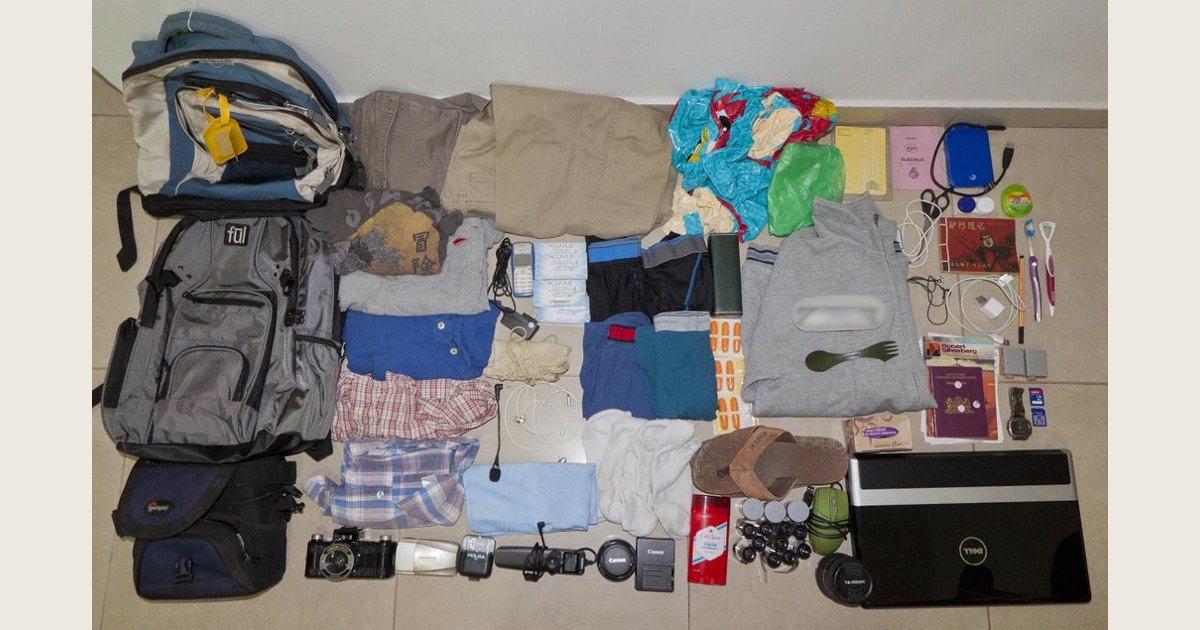
This photo shows a general travel packing layout, not a hiking kit. To estimate volume for a trail trip, lay out your own shelter, sleep system, clothing, food, water, fuel and safety essentials, then compare what fits inside versus in exterior pockets. Photo: “Backpack Contents for 188 days” by Nestor’s Blurrylife, licensed under CC BY 2.0; resized. Illustrative stock image, not a pack test.
A simple volume check: gather your normal trail kit, including the bulkiest seasonal layers and food, and test it in the pack configuration you would buy. Note what fits inside the main body, what you would place in external pockets, and whether anything must be strapped outside. Repeat for the trip where you carry the most. If your kit fits only when compressed more than you would realistically pack it, the pack’s nominal capacity may not be useful capacity for you.
Fit and suspension are personal
A spec sheet can describe a frame, hipbelt, or size range; it can’t tell you how a loaded pack will feel on your torso. Both models have framed suspension systems, but frame shape and belt design differ. Confirm torso and hipbelt sizing using the maker’s current chart, then try the pack with a representative load if you can. A few ounces saved won’t help if the pack shifts, creates pressure, or doesn’t transfer weight where you need it.
For help with sizing, use the site’s guides for men’s hiking backpack fit and women’s hiking backpack fit. After selecting a size, follow the practical steps in how to pack and adjust a hiking backpack. Those fit and adjustment checks matter more than assuming one suspension style is universally more comfortable.
A quick buying checklist
Before choosing either pack, work through these questions:
- What’s your heaviest realistic full load? Include food and water, then compare it with the maker’s comfort guidance and maximum.
- Which volume number do you need? Compare main-compartment capacity as well as total capacity, and account for bulky gear.
- Which components are included in the listed weight? Confirm the size, belt, straps, frame, pockets, and any removable pieces for the configuration you’re considering.
- Does the pack fit when loaded? Use the current sizing chart and, where possible, test with the kind of weight you’ll carry.
- Is the weight saving worth the trade-off for you? The Arc’s headline figure is about 12 ounces below the Mariposa’s advertised figure, but those are not guaranteed like-for-like configurations. Decide based on the exact packs, not that subtraction alone.
This comparison uses current manufacturer product pages and does not include independent durability testing, side-by-side fitting, or trail use. Manufacturer specifications can change; verify the details for your selected size and options. The links above are ordinary product-source links, not affiliate links.
Frequently asked questions
Is the lightest hiking backpack always the best?
No. A low empty-pack weight is useful only if the pack fits, holds your gear, and carries your real load within its maker’s guidance. A slightly heavier pack that fits better can be the more practical choice.
Is a 60-liter hiking backpack too large?
Not automatically. It depends on your gear, trip length, conditions, and packing style. Also compare main-compartment capacity: both packs in this guide count outside-pocket volume toward 60 liters, and they divide that volume differently.
Should I hike at the maximum load listed by the manufacturer?
Treat a maximum as an upper boundary, not a comfort target. The published comfort guidance is lower for both examples here; check the current instructions for the specific model and configuration you choose.
Bottom line
For a 60L pack where lower listed weight is the priority, the Zpacks Arc Haul Ultra is the clear option in this comparison—but its actual weight depends on configuration, and its maximum is not its comfort target. The Gossamer Gear Mariposa 60 is worth considering if you want its framed design and seven-pocket layout and your load stays within its guidance. Choose the pack that fits your body and real trail load, not the lightest number on a product page.